
Book Club
182,094 members
📚 Calling all Bookworms 🐛✨ we devour books faster than pizza (almost), so share the best thing you’ve read recently!
@TensaZangetsu
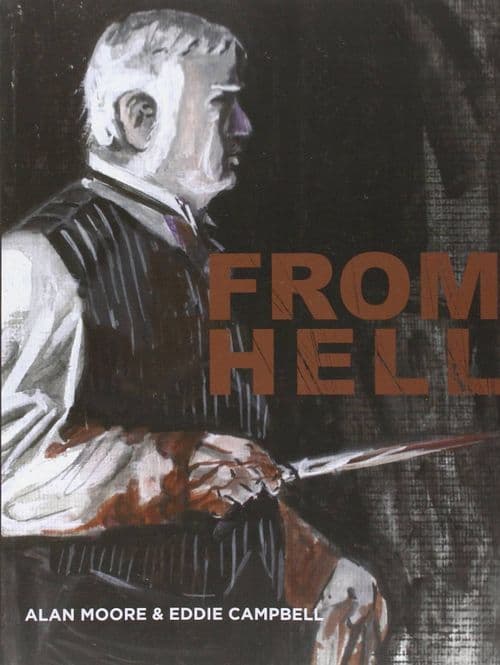
From Hell (Spiderbaby Grafix, Tundra Publishing, Kitchen Sink Press, 1989) Written by Alan Moore, illustrated by Eddie Campbell
From Hell is a monumental graphic novel set in 1888 Whitechapel, the book presents a fictionalised yet rigorously researched account of the Jack the Ripper murders. Rather than treating the killings as a simple mystery, Moore structures the narrative around the royal conspiracy theory advanced by Stephen Knight, casting Sir William Gull, physician to Queen Victoria, as the Ripper. In Moore’s interpretation, the murders are not merely crimes of passion or madness but ritualistic acts designed to reinforce patriarchal and monarchical dominance, entwined with Freemasonry and the preservation of empire. The result is less a whodunit and more a slow, intellectual descent into power, ideology, and the machinery of history.
Moore’s storytelling is dense and layered, shifting perspectives between Gull, the victims, police investigators like Inspector Abberline, and the wider London populace. This multiplicity of viewpoints humanises the victims, particularly the women of Whitechapel, while simultaneously exposing the indifference and moral decay of Victorian society. The narrative frequently pauses for philosophical digressions, most famously during Gull’s carriage tour of London, where architecture becomes prophecy and geography becomes a map of occult power. Moore uses these moments to argue that history itself is shaped by violence and that the 20th century, with its wars and mechanised brutality, is metaphorically “born” in the Ripper’s acts. The extensive appendix included in collected editions, running hundreds of pages, documents Moore’s research and distinguishes fact from invention, reinforcing the book’s hybrid nature as both fiction and historiographic commentary.
Eddie Campbell’s black and white artwork is integral to the book’s impact. His scratchy, almost rough-hewn linework rejects glamour and sensationalism, presenting Victorian London as suffocating, claustrophobic, and deeply human. The art oscillates between documentary realism and surreal abstraction, particularly during Gull’s visionary episodes, where time fractures and the future bleeds into the present. The choice to avoid colour enhances the bleakness and strips the violence of exploitation; the murders are disturbing not because they are stylised, but because they are rendered with an unsettling matter of factness. Campbell’s understated facial expressions and loose compositions demand careful reading, rewarding patience in the same way Moore’s script does.
In terms of impact and legacy, From Hell is widely regarded as one of the most important graphic novels ever created, often mentioned alongside Moore’s own Watchmen as proof of the medium’s literary potential. It helped solidify the graphic novel as a vehicle for serious historical fiction and true crime, influencing subsequent creators who sought to blend meticulous research with formal experimentation. Beyond comics, it contributed significantly to modern cultural interpretations of Jack the Ripper, reframing the murders through lenses of systemic misogyny and institutional power rather than mere individual pathology. A 2001 film adaptation starring Johnny Depp introduced the story to a broader audience, though it simplified Moore’s complex themes and was publicly disowned by the author. Decades after its completion, From Hell remains a challenging, uncompromising work, less concerned with solving a mystery than with exposing the dark foundations upon which modern society was built.
@Darkside8997
Half the books you were "forced" to read in high school are actually spectacular, you just didn't have the emotional maturity to understand them yet.
@Shortcake
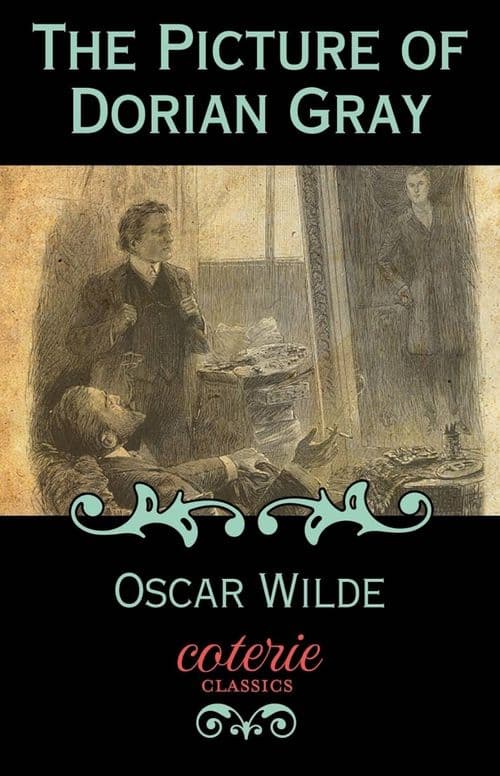
Assalamualaikum warahmatullahi wabarakatuh 🌸 🌸 🌸 Finally got around to finishing the book!!!! The Picture of Dorian Gray ⭐️⭐️⭐️⭐ ⭐
I'll be honest, I've picked up and put this book down too many times to count, but I finally said enough was enough and gave it a final chance, and I must say I was surprised by what I discovered. It was dark, unsettling, and honestly made me think a lot more than I thought it would.
Dorian was such an interesting character to follow because he starts off so innocent and you get to watch that slowly change. What really stuck with me was how much Lord Henry's influence affected the way Dorian began to see the world. It made me question whether someone can really be blamed for the things they do when another person has such a strong influence on them. And at what point does influence stop being an excuse and become personal responsibility? That was probably the biggest question I took away from the book.
I also really liked the portrait itself and what it represented. Dorian remains young and innocent looking on the outside while the portrait reveals what he's becoming. It made the whole story feel even more disturbing because everyone around him sees one version of Dorian, while the portrait shows another. Some parts were definitely slower than others, but I actually enjoyed the philosophical conversations. Definitely one I'll be thinking about for a while. 👌🏽
And lastly, if you're looking for literary insults, search no further. Oscar Wilde does a spectacular job of making his characters absolutely ruthless with their words. “You will always be fond of me. I represent to you all the sins you never had the courage to commit.” What's a qoute that stuck with you?
@Hassantry
To anyone who reads Dostoevsky, Kafka, Plath, Woolf, Nietzsche, Tolstoy, and Camus...
I gotta ask, "are you guys doing okay?" 🫠
@nasibaaah
"If you wait by the river long enough, the bodies of your enemies will float by." — Sun Tzu🤌🏽
@Mu_the_Ansaar
For the Potterheads 🪄✨
@UmmulKhayr001
Assalamu alaikum warahmatullah wabarakatuh
Hii, I'm new here and one thing that I love to tell people I meet is that I love books and I'm glad to be here. Hope I'm welcomed?
@autumn1980
Gabriel Oak is probably my favourite character in Far from the Madding Crowd. There is something very admirable about his quiet strength and self control. He loves Bathsheba deeply, but never tries to control her or take away her independence.
What I admire or like is that he never resents her success, even when she becomes his employer, and he never turns against her when she makes poor choices. He simply continues to be there when she needs him.
Bathsheba said no to him, turned him away, sent the silly Valentine to Boldwood, married Troy, and yet Gabriel stayed. Not because he wanted to possess her, but because he loved her.
Compared with Troy’s charm and impulsiveness and Boldwood’s obsession, Gabriel’s strength feels much deeper. His patience, loyalty and self control ultimately prevail. He doesn’t need to possess Bathsheba to love her, and I think that is what makes their relationship so moving.
Far from the Madding crowd Thomas Hardy
@khalid774458
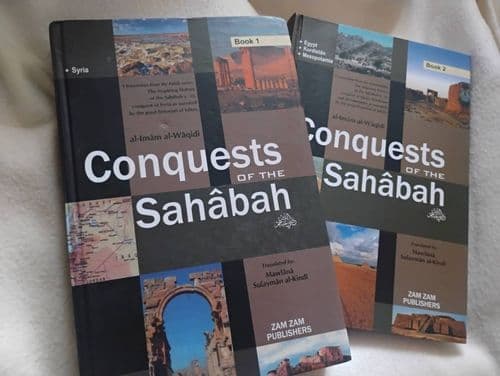
Two volumes maashaAllah
@wissal2119812
Who loves poetry? Arabic poetry?