Psychology & Neurodiversity
4,688,663 members
From human behaviour to neurodiverse perspectives, explore how we think, feel, and experience the world 🧠
@Tahmida25907742
My dear women, Before choosing a man, make sure that he is not a Mamma's boy, Not controlled by his Parents and family. This type of man is emotionally immatured and they are not independent mentally and emotionally. They have no self identity. They will make your life hell.
@Jonas56147819
Do we really fall in love with the person?
.
.
.
.
.
.
Or just an idea of that person?
@mirroredlabyrinth
Thoughts?

@Lina9811
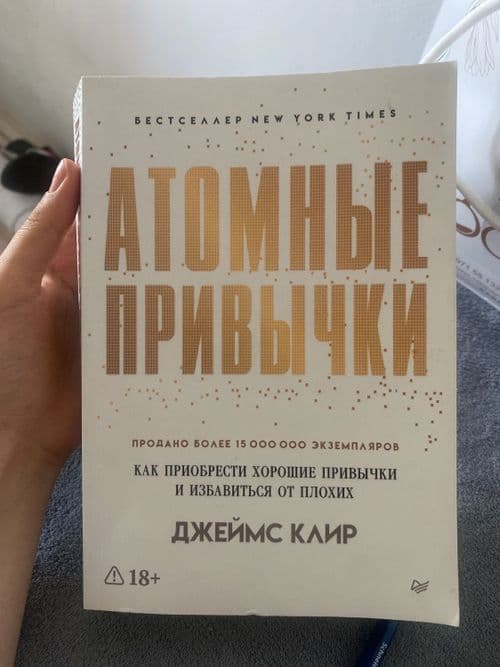
Currently I read this book , in English it calls
“Anatomic habits”
And it’s motivate me to be better .
Highly recommend to everyone
@Kashif 36594
What is it about toxic relationships & friendships that makes a person come back for more? 🤔
Is it the lack of self respect or something else?
@siti95296
How does it feel to have no one and live alone?
@Cut40990456
You can't go back to the person you were before...
You knew what you known now...
@Mulkiyya91963893
The Mind Behind Waiting
Have you ever noticed...
Waiting has an interesting sense of humour.
It rarely changes tomorrow.
It spends most of its time changing the person who's waiting.
The clock is innocent.
It's our imagination that keeps running ahead of it.
What if it never happens?
What if everyone else gets there before me?
What if I'm the exception?
Lately, I have been wondering...
Maybe waiting doesn't steal our peace.
Maybe it's the stories we whisper to ourselves while we wait.
Strange, isn't it?
We say we are waiting for tomorrow.
But most days...
we are really waiting for certainty.
Perhaps that is why waiting feels so heavy.
Not because time refuses to move.
But because our hearts keep trying to arrive before Allah has written the moment.
@ZJS
Are you more likely to follow a tradition or question everything?
It turns out your MBTI personality type plays a massive role in how you view religion, faith, and spirituality. Data shows a pretty clear split in how different groups approach the big questions:
The Traditionalists (SJs): ISFJs, ESFJs, ISTJs, and ESTJs are statistically the most religious. They deeply value community, ritual, and the comfort of long-standing traditions.
The Seekers (NFs): INFJs, INFPs, ENFJs, and ENFPs lean heavily into spirituality. They might skip organized religion entirely to focus on a deeply personal, meaning-driven inner journey.
The Pragmatists (SPs): ISFPs, ISTPs, ESFPs, and ESTPs take an individual approach. For them, faith has to feel real in the present moment or make practical sense. They are the classic vagabonds, oft the heroes of Islamic tales and knighthood.
The Skeptics (NTs): INTPs, INTJs, ENTPs, and ENTJs are the least religious group. Their default setting is to question authority, meaning they usually land on agnosticism or atheism, however they were also the most prominent of Islamic Scholars, a force to be reckoned with when used for good.
Where do you land on the spectrum? Drop your MBTI type below and let me know if this matches your vibe.