Sufis
57,344 members
Sufi? Want to grow your spiritual side? Talk with other sufis here
@RumiShams
Find yourself a mirror
@RumiShams
Someone who have read mathnavi all or some of it
No farigh requests
And doctor by profession
@Hassan66854590
Assalamu alaikum brothers and sisters,
Does anyone know of sisters around the age of 22 that follow tasawuf and do milaad/mawlid?
I was recommended to ask directly on this group rather than searching endlessly on muzz.
Jazakallah khair
@maryam2026l
Wa alaikum as salaam wa barakatuh brothers and sisters in faith.
I am a Muslima with a heart for Sharia, Fiqh, and Tasawwuf, moving to England in January.
May any of you kind brothers or sisters in the UK know of a Sharia and Tasawwuf values-centred marriageable man in your family or community (45years of age +) with a sincere loving kind heart, and humble nature? Insha’Allah 🙏📿
I pray to Allah that you each meet the love of your life soon too, Insha’Allah 🌷
@Mina48000468
Rumi~

@wasim786
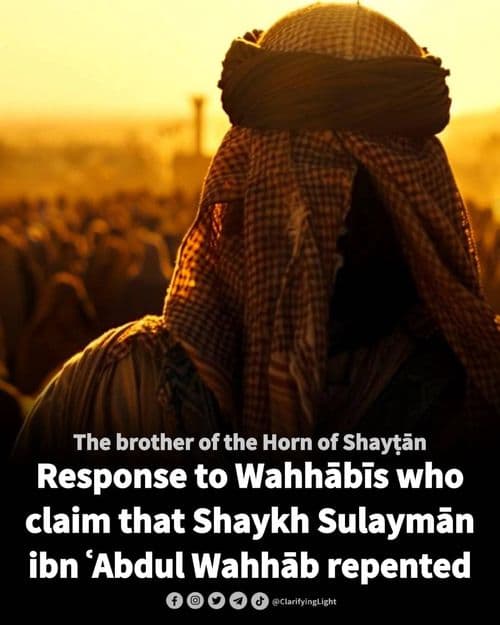
The Prophecy of Najd and the Historical Opposition to Muhammad ibn ʿAbd al-Wahhāb
In an authentic hadith recorded in Ṣaḥīḥ al-Bukhārī, the Prophet Muhammad ﷺ repeatedly invoked blessings upon Syria (Shām) and Yemen when asked to include Najd. He then warned that tribulations, earthquakes, and afflictions would emerge from that direction, describing it as the place from which the Horn of Shayṭān would appear. The author connects this prophecy to the emergence of Muhammad ibn ʿAbd al-Wahhāb in Najd and the religious movement associated with him.
One of the most significant historical opponents of Muhammad ibn ʿAbd al-Wahhāb was his own elder brother, Shaykh Sulaymān ibn ʿAbd al-Wahhāb, a Hanbali scholar who authored substantial refutations of his brother’s teachings, most notably al-Ṣawāʿiq al-Ilāhiyyah fī al-Radd ʿalā al-Wahhābiyyah. His criticisms were not isolated disagreements but part of a wider opposition among scholars of the period who challenged the movement's theological positions and approach to declaring other Muslims disbelievers (takfīr).
A common counterargument among later defenders of the movement is that Sulaymān eventually repented, reconciled with his brother, and abandoned his opposition. However, the historical evidence presented for this alleged repentance is questionable. The article argues that no reliable contemporary documentation establishes such a retraction, and that the claim appears in much later sources without a verifiable original letter or identifiable publication.
Historical accounts by Ibn Laʿbun, Ibn Bishr, and others describe Sulaymān's continued opposition, including his involvement in resistance against his brother's forces. According to these accounts, he was eventually taken against his will to Dirʿiyya, where he remained under confinement until his death. These accounts make no mention of a voluntary reconciliation or a change of religious position. The article also highlights the research of later scholars, including ʿAbdullāh ibn ʿAbd al-Raḥmān al-Bassām, who questioned the authenticity and historical purpose of the alleged repentance letter.
There are further reasons to doubt the letter's authenticity. Its attribution is traced to much later writers, including ʿAlī Jāwad Ṭāhir and Nūr al-Dīn al-Ziriklī, without a clearly established manuscript history. Its language and composition allegedly differ from Sulaymān's authenticated writings, while its chronology raises additional questions. Furthermore, even scholars and editors associated with the Wahhābī tradition have acknowledged the absence of convincing evidence that Sulaymān ever retracted his position.
The article also challenges the claim of a separate secret letter supposedly discovered by later Wahhābī figures, arguing that its transmission cannot be adequately established and that those attributing it to Sulaymān lived generations after the events in question.
<CUSTOM_BOLD>The central argument is that Sulaymān ibn ʿAbd al-Wahhāb remained a firm critic of his brother's movement, and that the story of his repentance lacks credible historical foundations.</CUSTOM_BOLD> Rather than dismissing his writings through an unsubstantiated claim of retraction, the author argues that they should be examined on their scholarly merits and considered within the broader history of Sunni opposition to the early Wahhābī movement.
@Hassan66854590
Assalamu alaikum,
Wanted to ask if Muzz is the right place to look for when it comes to a spouse that follows an aqidah close to tasawuf?
Iv seen not many sisters that celebrate mawlid/milaad etc.
Jazakallah khair,
@hana608076
Imam Al-Ghazali’s Warning on Family and Wealth
The famous Muslim philosopher and theologian Imam Al-Ghazali deeply analyzed this human psychology in his writings. He noted that while marriage is normally a spiritual shield, a time would come when family life changes into a heavy burden driven by worldly competition. He highlighted traditional warnings that in corrupt eras, a man's family might push him toward ruin by demanding more than he can afford, destroying his peace and faith. In such times, the focus shifts entirely from divine duty to selfish interests, causing men to seek the emotional or casual benefits of companionship while completely avoiding the financial protection and care they owe a wife.
@fe89
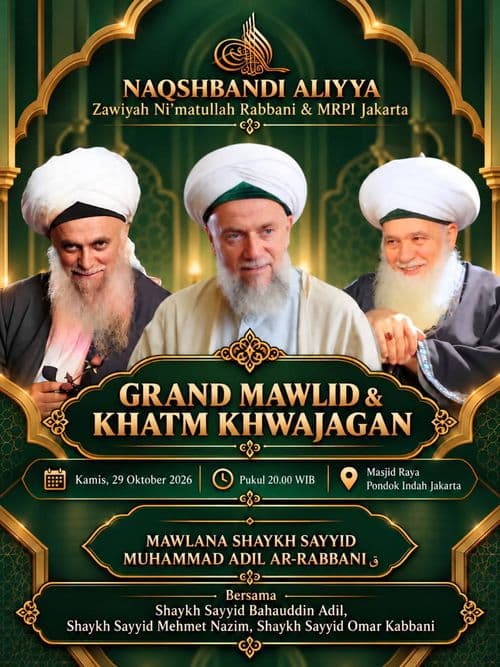
Upcoming Dhikr event in Jakarta, Indonesia.
@mughirah95481
Assalamualaikum to the Seekers