
Politics
139,773 members
This is your platform to share opinions, stay informed, and engage in civil discourse with fellow members who share a passion for politics and governance. Please be respectful to one another and above all remember to keep it halal.
@LearnerPractitioner
😂 I find the concepts of Globalism and the Ummah fascinating.
The idea that 8 billion humans, or 2 billion Muslims, are somehow “one” sounds beautiful in theory.
Bro, the world runs on *national interests, borders, power, and geopolitics, not emotional slogans. 🌍
These concepts might fulfill your emotional or spiritual needs, give you a sense of belonging, and make you feel good. Nothing wrong with that.
But let's not confuse what makes us feel united with how the world actually operates.
Unity is an ideal. National interest is the reality.* 🗺️
@IamNad
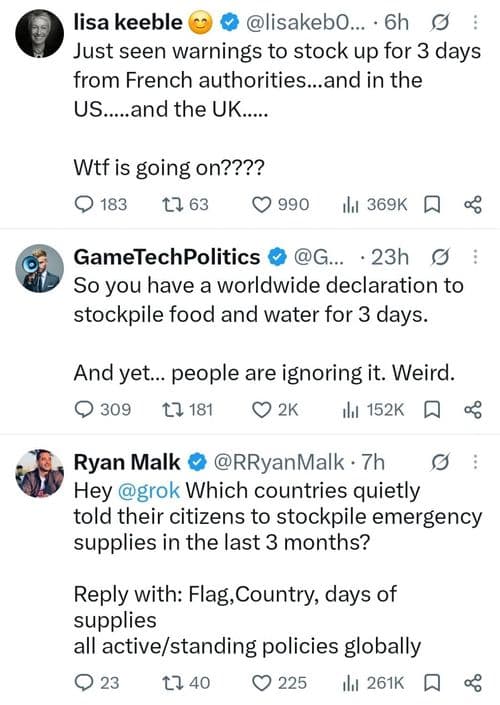
Seeing multiple news from different countries to stockpile food and supplies for 3-30 days as if something is going to happen globally. And these are official government orders not internet rumors(I verified). The reason is not given by any country. My Instagram algorithm is also pushing survival and DIY videos all of a sudden. And I am downloading them in panic. 😅
@Judicious
Zio Eisenkot is only slightly ahead of zio Netanyahu in exit polls.
First projections show the opposition bloc would win 52-53 seats, while the Netanyahu bloc would have 50 seats.
@persianprincess
What do yall think about the Iran, Saudi,
Pakistan and Turkey talks 👀
@spongy750020
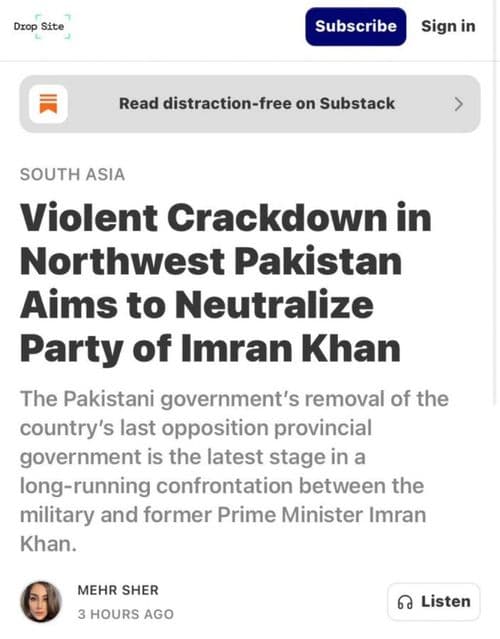
“VIOLENT CRACKDOWN in Northwest Pakistan Aims to Neutralize Party of Imran Khan.”
A peaceful protest crushed by a deadly crackdown by law enforcement, followed by hospitals refusing treatment and concealing records of those gunned down or injured.
The details in the latest story by Drop Site News is the pattern that has persisted under General Asim Munir’s regime for the past four years.
#PakistanUnderAsimLaw #PakistanUnderFascism #EnoughIsEnoughFreeKhan
@musadhiek

Korra The Taymi on Instagram: "What’s The Biggest Contradiction in Feminism? #islam #feminism"
https://www.instagram.com/reel/De-Us63Rg-s/?vrfl=MWZpMno1OGNzdGp2cA==
@LearnerPractitioner
To understand why these Muslim and Hindu rulers did not convert earlier to match their populations, you have to look at how power actually worked in feudal India.
Rulers maintained power through military force, alliances, and elite tax-collecting networks—not by popular votes or religious majorities.
Part 1: Why Rulers Didn't Convert Earlier
Before modern democracy, a king did not need the "approval" of the masses to rule. They relied on specific systems that made conversion politically useless or even dangerous:
• The "Sword Law" (Military Might): Rulers kept power because they had the biggest army and fortresses. As long as the peasants paid their taxes and the army remained loyal, it did not matter what religion the king practiced.
• The Muslim Ruling Elite Network: Rulers like the Nizam of Hyderabad or the Mughals belonged to a powerful, interconnected elite class across Asia and the Middle East. If a Muslim ruler converted to Hinduism, they would instantly lose their legitimacy,
Vision for the Ummah for the 21st Century
The Economic Ummah(EU)
Core features:
-
Centralized Islamic Banking Institution: The establishment of a Muslim central bank that strictly follows Islamic jurisprudence, notably prohibiting interest (riba) and eliminating interest-based debt slavery.
-
Ownership Structure:
Muslims would act as shareholders through nation-state buy-ins, creating a collective, state-backed ownership model. -
Resource-Backed Currency:
The creation of a new currency backed by tangible assets—specifically oil reserves and gold—to easily facilitate trade among Ummah nations. -
Economic Development Focus:
The funds generated and managed by this bank would be directly used to create and develop local national economies, leveraging each nation's native resources (e.g., oil and related products, minerals, and gold). -
Strategic Zakat Network for Food Sovereignty:
Establishment of a Zakat-based network aimed at challenging global grain monopolies and ensuring food security as a fundamental human right. This includes:
Building multiple reserve granaries across Ummah nations. Sourcing grain raised domestically within Ummah nations. Allowing member nations and humanitarian organizations to request Zakat-based food aid based on needs.
Decentralization and transparency as a way to Curb Corruption
The pragmatic person in me must state the perceived hurdles that exist before such a system can take shape. Mainly, these include the debts of Muslim nation-states to foreign, global central banking cartels, as well as the ongoing selling off of land rights (i.e., water rights) to multinational corporations. Finally, there are the openly corrupt systems that exist within current Muslim nation-states, where national leaders continue to increase their personal net worth as long as the current system persists.
@ehirim
It’s easy to call those who sell their votes foolish. But what’s more foolish than that is leaving the responsibility of deciding who governs you for the next four years in the hands of people you consider stupid.
The poor and the illiterate will always be available for unscrupulous politicians to exploit during elections. When you decide not to vote because you believe your vote won’t count, you leave your future, and that of your children, in the hands of the very people you look down on.
The person who sells their vote takes action out of desperation for survival. The person who considers their time too valuable to participate in an imperfect electoral process takes no action, perhaps out of pride.
Every time I leave the house, I ask at least five random people if they’ll be voting in the coming elections. Four out of five times, I get the same answer:
“Why should I vote when my vote won’t count?”
What they fail to realise is that if everyone who believes their vote won’t count actually votes, their votes would indeed count.
Until those who think they are too enlightened, too sophisticated, or too important to vote begin to participate, we will continue to see situations where the votes of the so called foolish outnumber those of the supposedly wise in the ballot box.
Imagine being a partaker in ensuring that the future of an entire country is left in the hands of those you consider the country’s poorest thinkers.
At the end of the day, one has to wonder:
Who really is the fool?