
Random
14,169,799 members
Share amusing anecdotes, bizarre facts, and hilarious jokes 🤪. Just one rule… keep it respectful ✨
@BmanCB
when shes lowk mid but she messaged me first so now i gotta give her a chance
@youaremytype
Most Men preach Men to be a good man but its extremely rare to see the opposite with women. Curious to why?!
@Shumii
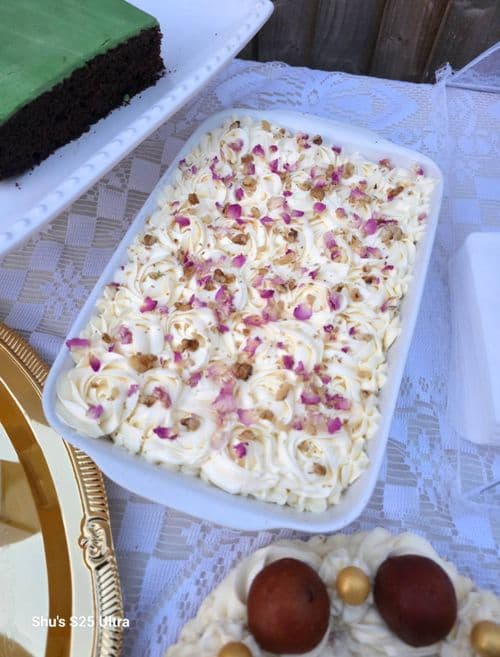
Milk cake! 😋 one of my absolute favourite 😍
@Yara24584188
When no one can find me 🥰



@aya347473
Let's get to no each other more
@flyeagle
I was cooking with friends last night and one of them got overdramatic about me 'wasting water' (and yes, I know the hadith too). But then those same people turn around and ask ChatGPT how to make tea. How is that fair? 💀
@amer-
The Qur’an describes marriage as a relationship of tranquility, love, and mercy—not as a competition or a power struggle. Allah says He created spouses “so that you may find tranquility in them,” and He placed “affection and mercy” between them (Qur’an 30:21). Another verse describes spouses as “garments” for one another (Qur’an 2:187), which scholars explain as providing protection, comfort, dignity, and closeness.
From that starting point, Islam pushes back against several narratives that can make marriage harder today.
For men, Islam does not teach:
“All women are after your money.” Instead, it teaches ḥusn al-ẓann (having a good opinion of people unless there is evidence otherwise) while also encouraging wisdom in choosing a spouse.
“Real men don’t have emotions.” The Prophet ﷺ cried, expressed love openly, joked with his wives, raced with them, and consulted them.
“Authority means domination.” Leadership (qiwāmah) comes with responsibility, financial obligation, justice, and accountability before Allah—not entitlement.
For women, Islam does not teach:
“Marriage is beneath you.” The wives of the Prophet ﷺ included scholars, businesswomen, and strong personalities, yet marriage remained an honored institution.
“Your husband must be perfect.” The Prophet ﷺ said:
“A believing man should not hate a believing woman. If he dislikes one of her characteristics, he will be pleased with another.”
This teaches balance and realistic expectations. Similar advice applies in the other direction as well.
“Independence means rejecting cooperation.” Islam recognizes each spouse’s rights and responsibilities while encouraging mutual support.
For both men and women, Islam rejects ideas like:
Viewing the opposite gender as the enemy.
Measuring worth primarily by wealth, beauty, or social status.
Delaying marriage indefinitely out of fear or chasing perfection.
Broadcasting private marital problems without need.
- Entering marriage with a mindset of “What can I get?” instead of “How can I fulfill my responsibilities for Allah’s sake?”
One of the biggest differences is that Islam focuses heavily on duties before rights. Modern culture often asks, “Am I getting what I deserve?” Islam asks, “Am I fulfilling what Allah expects of me?” If both spouses sincerely adopt that mindset, conflict often becomes easier to navigate because each person is trying to give rather than only receive.
That doesn’t mean Islam asks people to ignore abuse or injustice. If someone is oppressive, neglectful, or abusive, Islam provides avenues for seeking justice and, in some cases, separation. Mercy is not the same as tolerating wrongdoing.
Another important point is that Islam recognizes human imperfection. The Prophet ﷺ encouraged choosing a spouse for their religion and character, but he never suggested that righteous people would be flawless. Even the best marriages involve patience, forgiveness, communication, and growth.
I think one of the greatest challenges today is that many Muslims absorb two different worldviews at the same time: Islamic teachings from the Qur’an and Sunnah, and relationship advice from social media. Those two frameworks often conflict. One emphasizes taqwā, sacrifice, mercy, and accountability to Allah; the other often emphasizes self-fulfillment, constant comparison, and individual gratification. That tension can create confusion about what marriage is meant to be.
Ultimately, the Islamic goal isn’t simply to “find the perfect spouse.” It’s for two believers to help each other become better servants of Allah. When that becomes the shared purpose, love, companionship, and family are strengthened by something deeper than feelings alone.
Allah knows best.
@sinzio
Muzz fam
Is jealousy
A green flag or red?
@wulandari_
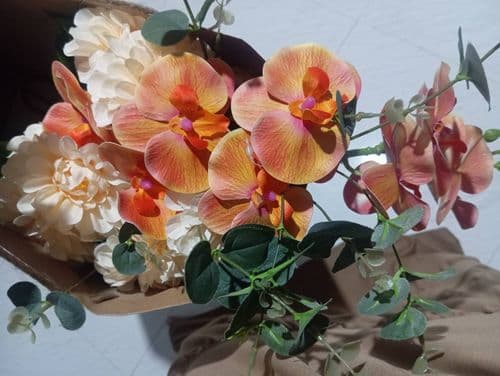
Uww... Guess what I'm gonna do this week!?
@Saeed7861
𝐋𝐚𝐝𝐢𝐞𝐬, 𝐲𝐨𝐮’𝐥𝐥 𝐧𝐞𝐯𝐞𝐫 𝐮𝐧𝐝𝐞𝐫𝐬𝐭𝐚𝐧𝐝 𝐭𝐡𝐞 𝐬𝐭𝐫𝐮𝐠𝐠𝐥𝐞 𝐨𝐟 𝐦𝐚𝐧 𝐟𝐥𝐮. 🤕🤒
𝐒𝐨𝐦𝐞 𝐛𝐚𝐭𝐭𝐥𝐞𝐬 𝐚𝐫𝐞 𝐬𝐢𝐦𝐩𝐥𝐲 𝐛𝐞𝐲𝐨𝐧𝐝 𝐲𝐨𝐮𝐫 𝐜𝐨𝐦𝐩𝐫𝐞𝐡𝐞𝐧𝐬𝐢𝐨𝐧. 😔