The 50+
105,299 members
A vibrant community for those 50 and beyond ✨ Let’s talk life, purpose, and all the things that make this chapter truly special!
@Pahima13621117
Mature man protects your heart. Selfish man protects his pride.
If he won’t take responsibility and only defends himself — walk away. Your peace matters most.
@Aidah28091935
Bismillah 🤲
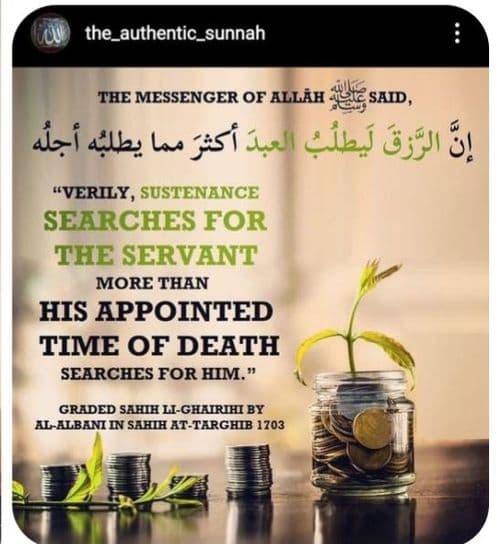
Sustenance comes seeking you
This beautiful teaching from our Prophet ﷺ reminds us: Allah has already written your provision — it is meant to reach you, even more surely than your appointed time of death.
You do not need to chase, worry, or overstrive. Your sustenance is written, it will not pass you by, and it will come exactly when it is meant to — by Allah’s will. Trust Him, do your part, and rest your heart. What is yours will find you. 🤲✨
@Pahima13621117
⚠️ SADNESS IS A TRICK OF SHAYTAN
Sadness is one of Shaytan’s most powerful tricks — designed to lead the believer astray.
He knows he cannot easily pull you into great sin — so he works quietly, slowly:
- -He deepens your sorrow until you forget Allah’s countless blessings
- -He magnifies your struggles until you feel unseen, unheard, and forgotten
- -He weakens your heart until you believe there is no hope left
- -He makes worship feel heavy — prayer, Qur’an, good deeds — until you drift away from the very Source of peace
His true goal? Not just to make you cry — but to make you doubt:
“Why won’t He answer? Has He forgotten me? Am I beyond help?”
And through that doubt — he pulls you away from Allah.
💛 BUT REMEMBER THIS:
✅ It is human to feel sad — even the Prophets grieved. The difference? Do not let sadness become your home.
✅ Hopelessness is not from Allah — when you feel empty, that is the moment to draw closer, not turn away.
✅ Sadness is a test, not abandonment — what Allah has kept from you is better than what you asked for. You just haven’t seen it yet.
✅ Fight it by remembering Allah — "Verily, in the remembrance of Allah do hearts find rest." — Qur'an 13:28
🤲 PRAYER AGAINST SORROW
Ya Allah — if this sadness is from You, grant me patience and reveal Your plan. If it is from Shaytan, cast it far from my heart. Do not let sorrow drive me away from You. Remind me of Your mercy when I forget. Strengthen my soul and keep me close. Ameen. 🤲🏼❤️
Never give Shaytan the key to your heart. Your hope belongs to Allah — it never fades, it never fails, and He never forgets 💛✨

@meowmix
I love my fifties 🥰 era…
@Amii18
Finding someone at this age (the 50s) is really not easy..
Those who look at you are often older ones.
Those of the same age want someone younger.
Hmmmm. 😅😅
@Urdu-Lover
I just listened [well these genre of songs you don't listen to them you have to/must actually actively feel them!] Khaiyre oye hoye hoye jo 🇵🇰 loag urdu zibaan say mehroom hai 😭😭😭 kyaa baat hai vah jee vah pure undiluted nasha hai! Veriky lucky indeed are those who have someone to hold and perform this song to directly oh-so-softly oh-so-gently in the ears of their beloved. Pure Emotional Intoxication. A non-toxic "high". The song initself or for those not lucky enough to have someone to perform this song to, then this song in and of itself is the most absolutely beautiful beautiful beautiful woman one could ever imagine.
I humbly present to those exquisite people attuned to such pleasures:
https://youtu.be/nUYafyymAiE
https://jamaa.com/social/post/pos_3JIAJMoV1dHxY8GLxW7ix5L4Mw2/?referrer=srf_3HgbyZPLBggqkudpxL1e6yGUKLo&location=group&t=1789338140&utm_source=muzz_app&utm_medium=jamaa&utm_campaign=pos_3JIAJMoV1dHxY8GLxW7ix5L4Mw2
@PeaceNblessings
Omg 😂
@PeaceNblessings
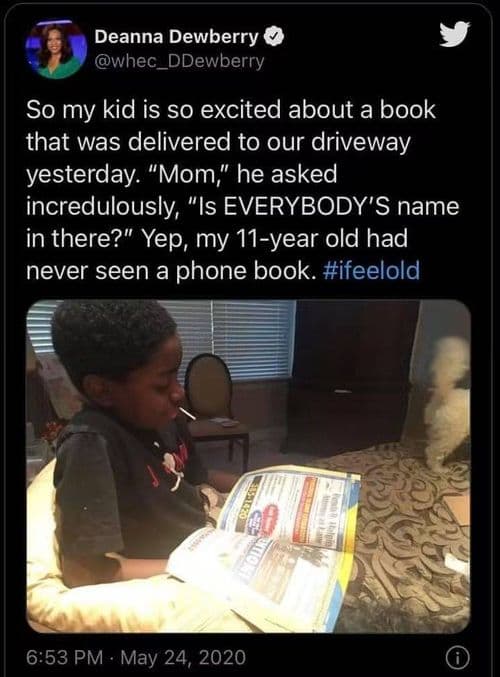
Life before cable tv

@PeaceNblessings
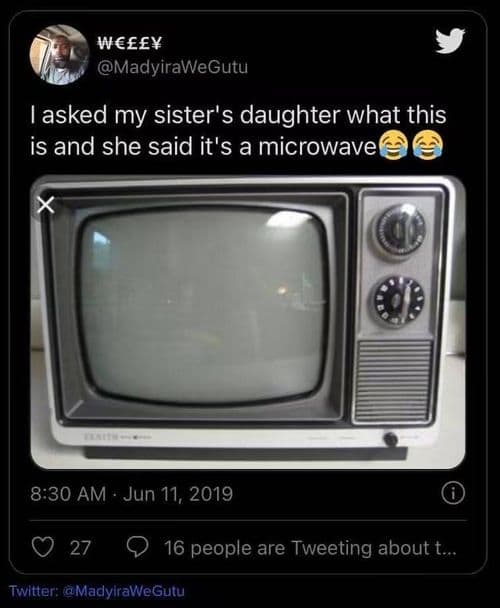
If you live in America..y'all remember these 😂
Life before flat screen tv
@hana608076
Understanding your mind and-subconscious control