Psychology & Neurodiversity
4,688,991 members
From human behaviour to neurodiverse perspectives, explore how we think, feel, and experience the world 🧠
@KheiraDZ
Time is your most precious bank.
But the only account we have to take out from without knowing how much is left.
Spend it wisely, to the fullest, and don't waste a second, it expands but it is finite.
Have a fabulous day everyone!
🤍🌷
@Jonas56147819
Most of us live in our own heads than in reality......
Agree? Disagree? Not sure?
@mqasim108113
What do you do when you like someone?
@Jonas56147819
True? False?
@suo
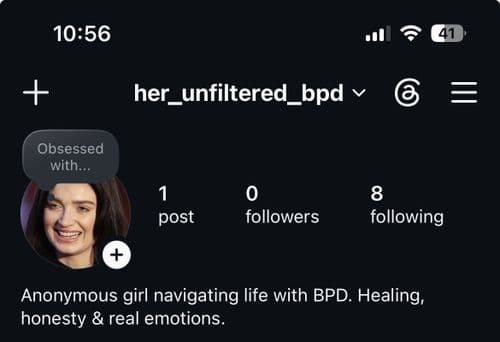
Should someone with Borderline Personality Disorder who has recovered from suicidal thoughts and survived two serious suicide attempts disclose both their diagnosis and their past suicide attempts, or only their diagnosis, to the person they’re dating before committing to a relationship?
@imfarhankhan
“She’ll heal.”
You don’t know how many tears she shed before Allah.
But she’ll never be the same again.
@zhaf__
How important do you think it is for a couple to share the same hobbies or interests in a relationship or marriage? I’m curious to hear your thought. Please do comment below
@mds13
<CUSTOM_BOLD>#Psychology #Overthinking #Resilience #HumanNature #MJGA</CUSTOM_BOLD>
⚠️ CAUTION! Plz first watch the attached video, then read to better relate.
Psychologists in the room, hold your chai... ☕
Today I randomly came across a YT Short where a tour guide was explaining how canyons are formed. The comments were full of appreciation for how brilliantly he explained such a complex concept.
Incredible!!!
But wallahi… my mind went somewhere else entirely. I started wondering…
What if some people are formed the same way?
What if, over the years, they have been absorbing the harshness of life and of people, and they simply bury it beneath momentary or transactional moments of happiness?
A disappointment covered by hope.
A hurt covered by a smile.
A betrayal covered by a chance.
And the process repeats.
So, at some point, do we all need a wind in our lives?
A person. An event. A tragedy. A conversation.
Something that blows away the loose layers around us and allows us to see what we have actually become beneath everything we have been quietly absorbing.
But what if that wind never comes?
How miserable would it be to continue standing in a shape we never realised we had become?
And then I observed it from another lense.
How about if those very layers add to our resilience, our strength, and our kindness.
So, the wind would only uncover a form that years of trials have been shaping all along.
The cost is real. But so is the beauty that follows.
Why?
Those canyons become landmarks of history and geography.
People admire the canyon.
They photograph it.
They speak of its beauty.
But hardly anyone pauses to think about every storm, every flood, every season that helped shape it.
Maybe people are no different.
The trials, circumstances and setbacks that shaped you, my brothers and sisters, the VERY YOU will always remain alive within your own experiences. You will remember every wind that carved your heart, your soul.
But the world will usually see only the person you have become and not the journey that made you.
<CUSTOM_BOLD>Jo saaz se nikli hai, woh dhun sab ne suni hai,
Jo taar pe beeti hai, woh kis dil ko pata hai.</CUSTOM_BOLD>
May Allah swt help us become the best version of ourselves amidst every trial and tribulation. And if we have lost sight of who we truly are, may He swt send us the wind that helps us reflect, realign, and return to Him, inshaAllah...✍️ 🤲🩶
Now here's my question…
How did my mind end up here from a random geology video? 😭
Is there actually something in psychology for this kind of thinking, or have I developed a habit of finding metaphors in everything?
Should I be concerned? 👀
P.S. Before anyone diagnoses me… yes, I keep touching grass. 🌿😅
@Ibrahim19910940
Maturity is understanding that people can see the same object from where they stand and see something different from what you see. Wisdom is trying to see the same reality from where those people stand. Once you understand this, you can avoid or resolve almost all your disputes with anyone..
@imfarhankhan
If you’re a person that really enjoys celebrating holidays and birthdays, it’s very important that you date someone that does too. You will indeed suffer dating anything else, they won’t get it