
Hajj and Umrah
7,302,355 members
A sacred journey of faith and devotion 🕋 Share reflections, duas, and experiences from Hajj and Umrah and support each other along the way.
@Mrfarhanshahzad
Allah knows the tears you hide, the battles you never talk about, and the prayers you make silently. 🤍
Keep trusting Him. Your story is not over yet. 🌙
@Aameen94440309
⚠️ WARNING — BEFORE MARRIAGE
If a man and woman are not married to each other, they are not husband and wife simply because they call each other:
“Bae.”
“Boo.”
“Boyfriend.”
“Girlfriend.”
“Partner.”
“Fiancé/fiancée.”
Etc more
Engagement does not make intimacy halal.
Until the nikāḥ is valid, they remain non-maḥram to one another.
So don't normalize:
❌ Holding hands
❌ Touching unnecessarily
❌ Hugging
❌ Kissing
❌ Cuddling
❌ Leaning intimately on each other
❌ Sitting in intimate seclusion
❌ Romantic physical affection
❌ Sleeping together
❌ Sexual touching
❌ Any other physical intimacy between non-maḥrams
Even if everyone around you is doing it, haram does not become halal because it becomes popular.
☝️☝️ Allah says:☝️☝️
“And do not approach zina. Indeed, it is ever an immorality and an evil way.”
📚📖 Qur'an 17:32📚📖
And the Prophet ﷺ taught us to observe boundaries between men and women who are not maḥram to one another.
If you genuinely want someone, don't build the relationship around what Allah has prohibited.
Do it the halal way.
Involve the family/walī where appropriate.
Keep proper boundaries.
Get to know one another in a permissible manner.
And if you are serious, work toward nikāḥ.
Don't say:
“But we love each other.”
Love does not change Allah's ruling.
Don't say:
“Everyone does it.”
Popularity does not change Allah's ruling.
Don't say:
“We're getting married anyway.”
Until the nikāḥ is done, the boundaries still apply.
Fear Allah even when nobody is watching. ⚠️
May Allah protect our brothers and sisters from haram relationships, strengthen those trying to remain chaste, and make halal easy and blessed for everyone seeking marriage.
Āmīn. 🤲🏽
@Aameen94440309
A SERIOUS REMINDER TO OUR GENERATION
Nowadays, almost everyone seems to have a title.
“Dr.”
“Professor.”
“Shaykh.”
“Ustādh.”
“Muftī.”
“Scholar.”
“Expert.”
And sometimes people become more concerned about being called the title than actually acquiring the knowledge that the title represents.
You call someone Ustādh, and they want to be called Ustādh.
You call someone Shaykh, and they want the title everywhere.
You call someone scholar, and suddenly they begin speaking on matters they have never properly studied.
Wallāhi, this should frighten us.
Ask some people a basic question about Qur'an or authentic Sunnah, and instead of knowing the answer, they immediately say:
“Let me check.”
Then they search Google.
They search social media.
They ask AI.
They copy an answer from ChatGPT.
They find a translation somewhere online and present it as though they have personally verified it.
Technology can be useful.
The internet can help us find books and sources.
AI can assist with research.
But none of these things make a person a scholar.
Google is not a muftī.
ChatGPT is not a muftī.
A translation is not the Qur'an itself.
A random social-media post is not evidence.
And an answer appearing on the first page of a search engine does not automatically make it correct.
Even translations and explanations can contain mistakes, omissions or differences in interpretation.
So when you don't know, say: “Allah knows best.”
Go back to reliable sources.
Check the Qur'an.
Check authentic hadith.
Look at the explanations of qualified scholars.
Understand the context.
Ask people of knowledge.
Don't speak about Allah without knowledge.
Allah says:
«“So ask the people of knowledge if you do not know.”
Qur'an 16:43»
And there is another problem that worries me deeply:
Some people are no longer doing daʿwah purely for Allah.
The camera comes on.
The lecture begins.
The video is edited.
The thumbnail is designed.
Then comes the waiting:
How many views?
How many followers?
How many likes?
How many shares?
How many comments?
How many people praised me?
And the heart can slowly become attached to the audience instead of the One being called upon.
This is dangerous.
Daʿwah is an act of worship.
And worship requires ikhlāṣ.
A person can say something true while still needing to examine his intention.
A beautiful lecture does not automatically mean a pure heart.
A large following does not automatically mean acceptance with Allah.
A person being called “Shaykh” does not automatically mean he is qualified to answer every question.
And having millions of followers does not mean you know more than someone with a small audience.
My brothers and sisters, fear Allah.
Before you speak, ask:
Do I actually know this?
Before you give a fatwā, ask:
Am I qualified to answer this?
Before you post a religious reminder, ask:
Is it authentic?
Before you chase views, ask:
Who am I trying to please?
And before you accept a title, ask:
Do I actually possess the knowledge that this title implies?
We should not be a generation that knows how to look knowledgeable without actually becoming knowledgeable.
We should not become a generation that knows how to make Islamic content but does not live by the Islam we preach.
And we should not become a generation that fears losing followers more than we fear losing sincerity.
Wallāhi, this generation should make us concerned.
Not because every online teacher is insincere.
Not because every person using AI is ignorant.
Not because every public lecture is ri yāʾ.
But because knowledge, authority and sincerity are serious matters.
Learn before you teach.
Verify before you share.
Ask before you answer.
And purify your intention before you stand before an audience.
May Allah protect our scholars from arrogance, our students from ignorance, our callers from ri yāʾ, and all of us from speaking about His religion without knowledge.
May Allah grant us ʿilm nāfiʿ, ikhlāṣ, humility and fear of Him.
Āmīn. 🤲🏽
Wallāhu Aʿlam.
@Abdulrazaq20336810
ASALAMUALIKUM EVERYONE.
@Ahmad35683724
Blessed morning towards Makkah inshallah
@Aishatun
🌙🤍 THE BEAUTY OF SURAH AN-NASR 🤍🌙
Surah An-Nasr reminds us that when Allah’s help and victory come, we should never let success make us proud. Instead, we should glorify Allah, thank Him, and seek His forgiveness. 🤲🏽
✨ Every victory is from Allah.
✨ Every open door is by His permission.
✨ Every blessing deserves Alhamdulillah.
✨ And even when things finally go our way, we should remain humble and close to Allah.
“So glorify the praises of your Lord and ask His forgiveness. Indeed, He is ever Accepting of repentance.”
📖 Qur’an 110:3
May Allah grant us victory over every hardship, open doors for us that we never expected, and make us grateful and humble whenever He blesses us. 🤲🏽❤️
Ameen ya Rabbil ‘Alameen. 🌸
@Ahmad35683724
Who’s in Makkah 🕋
@Sarah42355632
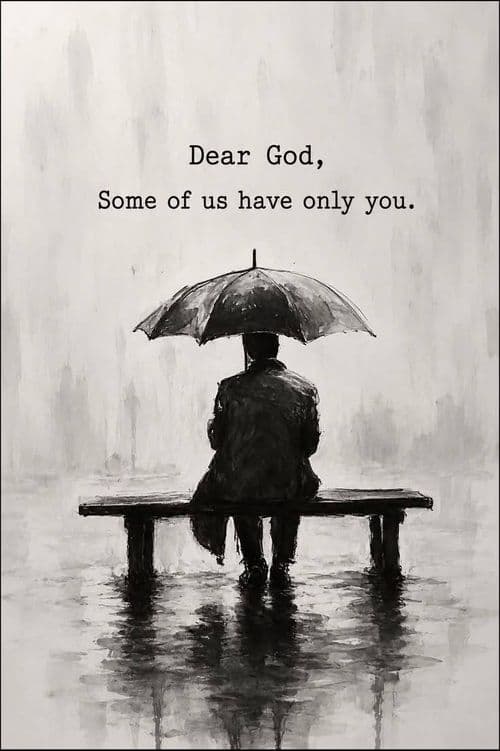
Only you🙏
@GracefuLioness
ʙᴇғᴏʀᴇ ᴀʟʟᴀʜ, ᴡᴇ ᴀʀᴇ ᴀʟʟ ᴇǫᴜᴀʟ
Racism has no place in Islam, for Allah does not measure us by the colour of our skin, the land we come from, or the culture we were born into, but by the righteousness within our hearts.
At Hajj, the world’s colours n distinctions fade beneath the white ihram -Black n White, Arab n non-Arab, rich n poor, all standing shoulder to shoulder before the same Lord.
N in those simple garments lies a reminder of our final journey: the same cloth that strips away worldly status echoes the shroud we will one day wear.
In life, we may cling to labels, but before Allah, those labels disappear. We return to Him as we came, equal, humbled, n judged not by where we came from, but by who we became.
<CUSTOM_BOLD>May Allah soften our hearts, remove pride n prejudice from them, n teach us to see one another with mercy. Different in colour, united in faith, n equal before the One who created us all. آمين.</CUSTOM_BOLD>
@i9o9m
every time I pass the door and see this, I feel like my heart is beating so fast.