
Book Club
social.group.members
📚 Calling all Bookworms 🐛✨ we devour books faster than pizza (almost), so share the best thing you’ve read recently!
@shaboogle
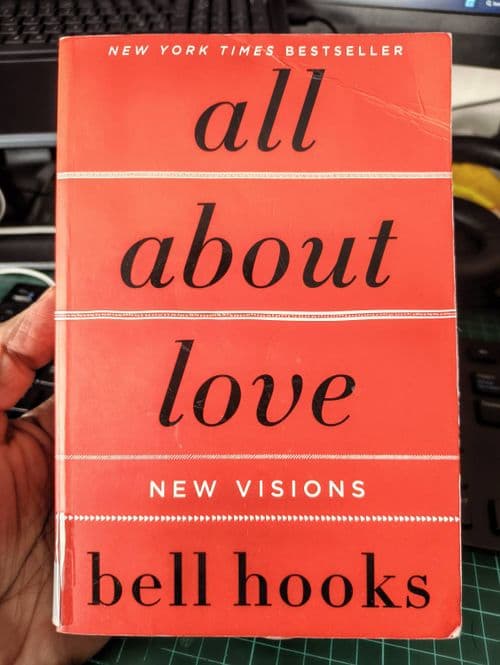
I picked this book up at the library because the title alone caught my interest. All About Love is a book about the search for the meaning of love, not just in a romantic sense. bell hooks presents love as an action, a choice, and an ethical practice.
The word “love” is most often treated as a noun, but hooks argues that we would understand love better if we used it as a verb. Love is something we do. It requires intention, responsibility, and practice. To truly love, we must learn to combine care, respect, commitment, trust, responsibility, as well as honesty and open communication.
Below is a summary of things I found most useful.
# Where we learn to love
Hooks argues that our childhood homes are the original school of love. We are not born knowing how to love ourselves or others. Instead, we are born with the capacity to respond to care, and whether that capacity develops depends heavily on the environment we are in.
As children, we learn what love looks like by observing how adults treat us and each other. We learn whether conflict is handled with care or cruelty, whether our needs matter, and whether affection is connected to safety or fear. When children are treated with care, respect, consistency, and attention, they are more likely to develop a healthy understanding of love. But when children experience neglect, humiliation, coercion, or punishment presented as love, they may grow up confusing love with pain.
Hooks makes a compelling argument for why ‘love and abuse cannot coexist’. Children who are treated cruelly by the same adults who claim to love them may internalise the belief that love includes domination, fear, and emotional harm. Learning a faulty definition of love during our formative years can make it difficult to love well as we grow older.
Hooks also criticises the power parents often hold within the private family dwelling. In many households, adults can decide what is best for children with little outside intervention, even when those decisions harm the child. This is why hooks argues that children are often treated as property rather than as people with rights, dignity, and emotional needs. To love children, adults must recognise their personhood. Love is not simply providing food, shelter, or discipline. It is shown through actions that affirm a child’s worth, autonomy, and humanity.
# Self-love
Self-love develops when we learn to extend the same qualities of love to ourselves that we offer others. This is especially important for people who did not receive unconditional love in childhood. Hooks suggests that even if we cannot change the past, we can begin to practise self-love by introducing life affirming habits, thoughts, and behaviours into our lives.
Although understanding the origins of fragile self-esteem can be valuable, hooks argues that we do not have to remain trapped by them. We can begin building self-love by actively developing the qualities that make love possible: trust, commitment, care, respect, knowledge, and responsibility. We can develop these qualities, and if they are already part of how we treat others, we can learn to extend them to ourselves.
Self-love cannot flourish in isolation
This is an important statement as it presents self-love as something we can't achieve on our own. We learn to love ourselves through loving relationships, community, and environments that affirm our value. When we give ourselves the love we may have longed to receive from others, we become better able to relate from a place of fulfilment rather than from a place of lack.
# Honesty, trust, and justice
Hooks argues that love cannot flourish without honesty. Without honesty, there can be no trust, and without trust, genuine intimacy becomes impossible.
Often, when people withhold information, protection of privacy is used as the justification. We all need space to be alone with our thoughts and feelings, where we can feel healthy psychological autonomy and choose to share when we want to. Secrecy, however, is often about power. It involves hiding or concealing information in ways that weaken trust and damage the connection. When we hide behind facades, manipulate others or withhold important truths, we prevent love from developing.
"When we reveal ourselves to our partner and find that this brings healing rather than harm, we make an important discovery that intimate relationships can provide a sanctuary from the world of facades, a sacred space where we can be ourselves, as we are... This kind of unmasking - speaking our truth, sharing our inner struggles, and revealing our raw edges - is a sacred activity, which allows two souls to meet and touch more deeply." - John Welwood
Hooks also connects love to justice. Love is not only a private feeling between individuals; it is also an ethical way of relating to others. To love someone is to care about their dignity, freedom and wellbeing. This is why domination is incompatible with love. Whether in families, romantic relationships, communities or society, love requires mutual recognition rather than control.
# Love and greed
Hooks argues that a culture built around consumption, competition, and individual gain makes love harder to practise. When people are taught to pursue instant gratification, material success, and personal satisfaction above all else, relationships can become transactional.
When greedy consumption is the order of the day, dehumanisation becomes acceptable.
In this view, people begin to treat relationships like products. Marketplace values begin to shape our attitudes towards love, and relationships are valued only to the extent that they satisfy individual desire. If someone does not immediately satisfy our needs, we discard them and look for someone else. Committed bonds, including marriage, friendship, family, and community, cannot last when this is the prevailing logic.
If money really made up for loss and lovelessness, the wealthy would be the most blissful people on the planet.
This is why Hooks links love to simplicity, compassion, and interdependence. Love requires time, patience, sacrifice, and commitment. It cannot thrive when every relationship is judged by whether it provides immediate personal fulfilment. Greed severs compassion because it teaches us to prioritise acquisition over connection.
# Personal reflections
I really enjoyed how Hooks presents love as a moral and social practice rather than just something we wait to receive. Love is something we must learn how to give, practise, and sustain. Hooks also makes a convincing case that many people struggle with love because they were never taught what healthy love looks like, but they can learn to love.
However, I also have some reservations. The second half of the book felt idealistic. Hooks places a lot of faith in compassion and altruism, but I wonder whether this leaves enough room for boundaries, self-protection, or even “tough love”. Unrestricted compassion can leave people vulnerable to manipulation.
I also felt that the book sometimes applies a rational ethical framework to human beings who are often irrational and shaped by biology, trauma, fear, and social conditioning. Greed, domination, addiction, and selfishness are not only moral failures. They can also be rooted in insecurity, survival instincts, or environments where people learn to protect themselves by hoarding resources. At times, hooks seems to find social cause and effect in behaviours that may also involve innate psychological struggle.
Even so, I like the core message that love is not passive. It is an active commitment to care for ourselves and others in ways that support the flourishing of souls.
@rm444825
When i read “life shrinks or expands in proportion to one's courage” i gasp for the breath and reminisced every occasion i couldn’t be brave.
@Hana8888
Who loves reading novel? What makes you could spend time reading a novel? What's your favourite genre?
@RashidHakim
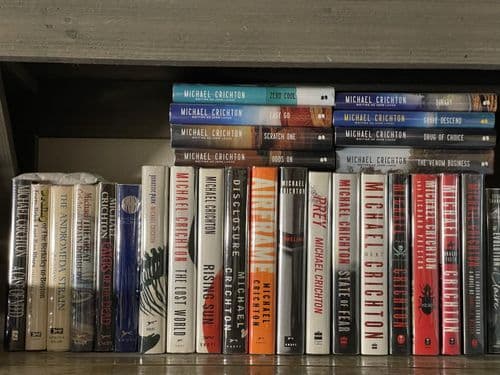
Clearing one of my shelves (I’m not certain, but it might be sagging) and I can finally see my Michael Crichton collection again 🥹
@Fatima99537418
Very good book !!
All interested on human rights and international law !!

@Fatima99537418
Great Lady! Amal Clooney !!


@Mansab84229597
Nevermind
@Darkside8997
two stages of reading:
- i’ve read 5 books in 3 days.
- i have not read a single sentence in months.
@NyzFinest786
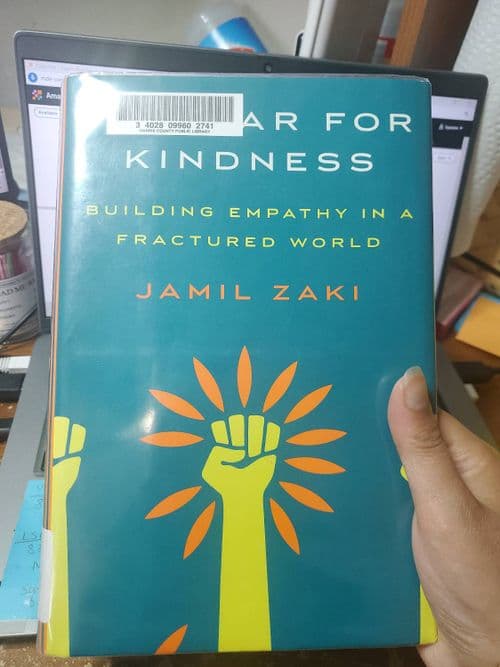
The war for kindness. My august book, hopefully i get done with this end by aug 11th. Books due soon!!!
@Fazlinsofiani_
Do you prefer e-book or real book? 📚

