All things marriage
social.group.members
Marriage is half our Deen 🤲 From wedding planning to relationship and marriage advice, share all your marriage related experiences here with our friendly community ❤️


😂😂😂no one is gonna get married through this app


Got a question for the guys, As a man we take up the responsibility for all finances in marriage, to provide and care for the family. How do you decide to spend money on things for hobbies?
If you have a budget that allows to spend on one luxury purchase or a hobby for either yourself or your wife, how do you decide who gets it vs who dont?
Do you guys decide it yourself as you're the provider?
Hallo who live in Berlin


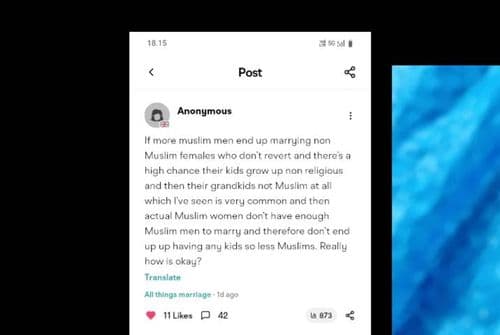
If more Muslim men end up marrying non Muslim females who don't revert and there's a high chance their kids grow up non religious and then their grandkids are not Muslim at all which I've seen is very common and then actual Muslim women don't have enough Muslim men to marry and therefore don't end up having any kids so less Muslim. Really how is it okay? answer the Islamic version
In Islam, the primary objective of marriage is to protect faith, build a righteous family, and grow the Muslim community (Ummah). While the Quran technically permits Muslim men to marry chaste women from the People of the Book (Jews and Christians), scholars heavily discourage it or consider it impermissible today if it compromises the children's religious upbringing.
The Islamic version of this issue revolves around specific rulings, wisdom, and safeguards established by Islamic jurisprudence (Shariah):
The Stated Permission: Surah Al-Ma'idah (5:5) of the Quran allows Muslim men to marry chaste women from the People of the Book. This permission was historically given as a means of dawah (inviting people to the truth) and building bridges with other monotheists.
Strict Conditions: To be valid, the wife must actively practice her faith (i.e., not be secular or an atheist) and be chaste.
Scholarly Dislike and Risk (Makruh): While technically permitted by the text, many classical and contemporary scholars strongly advise against it. The consensus is that if there is a genuine fear that the children will lose their Islamic identity, the marriage becomes highly discouraged or even impermissible.
The Obligation of the Father: In Islam, the husband is the shepherd of the family and bears the religious responsibility of ensuring his offspring are raised with Islamic values. If a man fails in this duty and his children abandon the faith, he will be held accountable for neglecting his family's spiritual guardianship.
Why Muslim Women Cannot Marry Non-Muslim Men: The prohibition against Muslim women marrying non-Muslim men is absolute across all schools of Islamic thought. This is primarily a protective measure, as the father is traditionally the head of the household. Islam protects the woman's rights and her freedom to practice her faith, ensuring her future children are guaranteed an Islamic upbringing.
Ultimately, Islam prioritizes marriage to a devout, practicing Muslim woman to safeguard the lineage and faith of future generations. Marrying outside of this for outward reasons (like physical beauty) at the expense of the children's religious future is widely condemned by scholars.